
For many years plastic combs were the most common choice in a hair-care routine. But in recent years many people have moved to a completely different kind of comb:
Natural wooden combs
And in particular:
The sandalwood comb
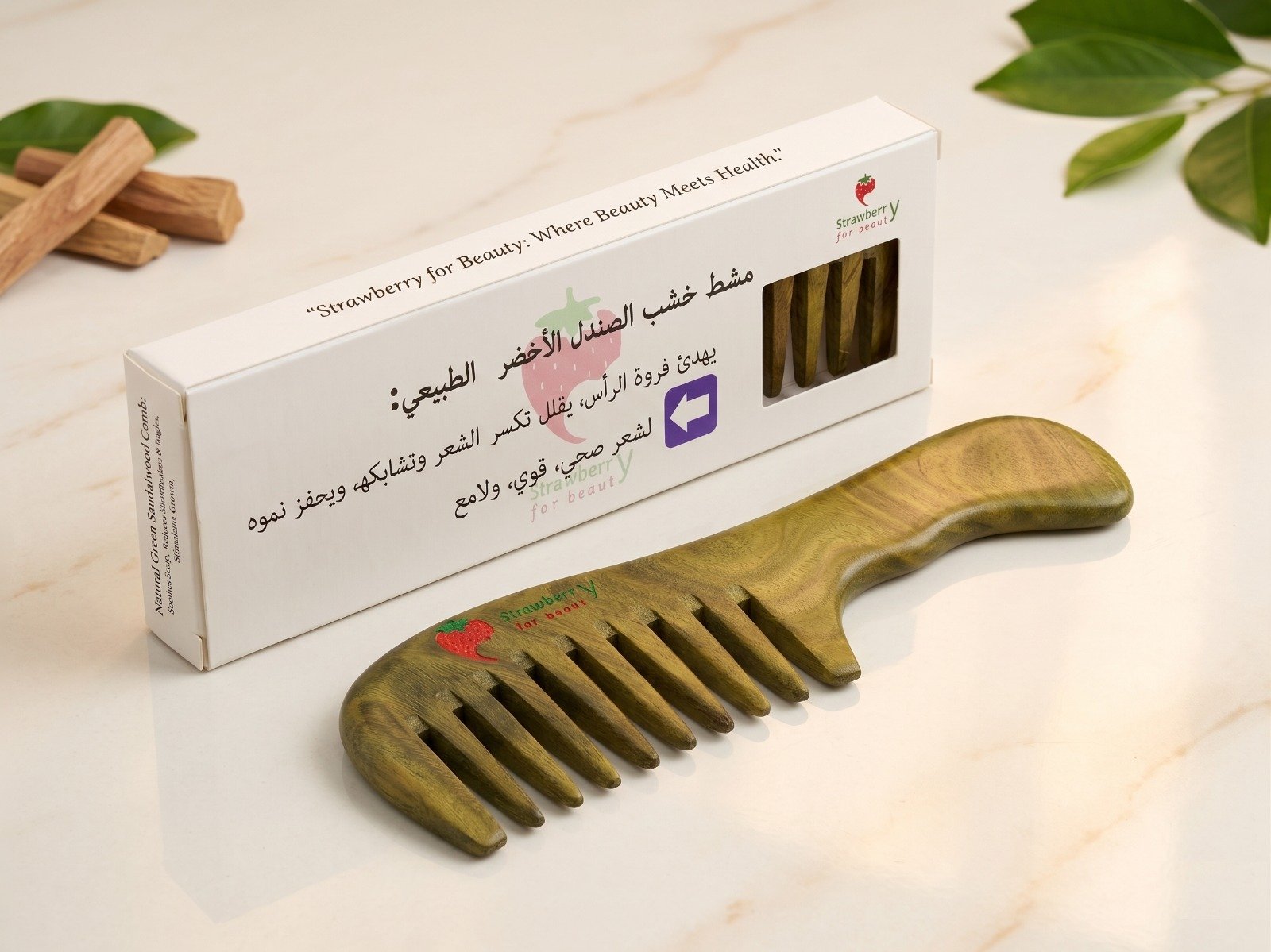
Not because of how it looks, but because many people began noticing a clear difference in:
- Frizz
- Static electricity
- Hair breakage
- How easily hair combs through
- How soft the hair feels afterwards
But is there genuinely a real difference between a wooden comb and a plastic one?
Or is the whole thing just a trend circulating on social media?
In this article we explain, in practical and scientific terms, why so many hair-care specialists now prefer natural wooden combs, and how the act of combing itself affects the health and daily appearance of your hair.
Why does the way you comb matter more than people think?
Many people focus on:
- Shampoo
- Serum
- Styling devices
But forget that daily combing directly affects:
✔️ Hair breakage
✔️ Frizz
✔️ Tension on the strand
✔️ Static electricity
✔️ Scalp comfort
Rough combing, or using unsuitable tools, can worsen hair problems over time.
How is hair affected while combing?
When hair is combed repeatedly, the strand is exposed to:
✔️ Friction
✔️ Pulling
✔️ Mechanical pressure
If the comb is harsh, or generates static, this can lead to:
- Flyaway hair
- Frizz
- Breakage
- Weakened ends
Why do some plastic combs cause more frizz?
One important reason is static electricity.
Some types of plastic increase the electrical charge during combing, which sets fine strands flying and frizzing.
Especially in environments with:
- Constant air conditioning
- Dry air
- Fluctuating humidity
Such as the UAE and the Gulf.
What sets a sandalwood comb apart?
A sandalwood comb differs from plastic on several points:
✔️ Gentler friction
✔️ Less static electricity
✔️ A softer feel while combing
✔️ A natural, refined appearance
Which is why many people have made it part of their daily routine.
Does the type of comb really affect breakage?
Yes, because some combs:
✔️ Pull the hair harshly
✔️ Catch between sections
✔️ Put excess pressure on the ends
Whereas a good comb helps to:
✔️ Detangle more gently
✔️ Reduce pulling
✔️ Reduce gradual breakage
Read more: Why don’t hair-loss products work in the UAE? (10 reasons results never come)
The relationship between frizz and static electricity
Many people assume frizz is simply the nature of their hair. In reality:
✔️ Static electricity
✔️ Dryness
✔️ Friction
all play a significant part.
Which is why people sometimes notice a clear difference just from changing the type of comb.
Why do some people prefer wooden combs alongside serum?
Because serum helps to:
✔️ Reduce friction
✔️ Improve slip
And used with a wooden comb, the whole experience is usually gentler and more comfortable.
Is a sandalwood comb suitable for every hair type?
In many cases yes, but it varies according to:
- Hair density
- How easily it tangles
- Strand thickness
Dry hair
Usually benefits most, because reducing friction helps reduce frizz.
Colour-treated hair
Colour-treated hair is more vulnerable to breakage, so gentle combing matters a great deal.
Curly or wavy hair
Needs gentler combing to reduce tangling.
Does a wooden comb treat hair?
No.
A comb is not a magic cure, but it is part of:
✔️ A healthy hair routine
✔️ Reducing daily damage
✔️ Handling the strand better
Why has the modern trend moved toward gentle care?
The focus used to be only on:
✔️ The fast result
Now the focus is more on:
✔️ Reducing damage
✔️ Protecting the hair
✔️ Preserving the strand’s health long-term
The difference between a natural feel and a synthetic one
Many people describe combing with wood as:
✔️ Calmer
✔️ Softer
✔️ Less irritating to the scalp
Particularly compared with some sharp plastic combs.
Why has the sandalwood comb become part of a luxury routine?
Because it combines:
✔️ A refined appearance
✔️ A natural feel
✔️ Gentle daily use
Which fits the modern direction of natural hair care.
Does the type of comb affect the whole care routine?
Yes, because combing happens almost every day.
And using gentler tools can help to:
✔️ Reduce pressure on the strand
✔️ Reduce gradual breakage
✔️ Improve the hair’s overall appearance
Common mistakes while combing
❌ Combing hair roughly
❌ Using sharp, cheap combs
❌ Forcing a comb through wet hair
❌ Yanking at knots
❌ Using combs that generate static
Why do people now pay attention to the small details of hair care?
Because hair health does not rest on a single product.
Strong results come from:
✔️ A complete routine
✔️ Good tools
✔️ Less daily damage
Is a wooden comb always better?
Not always, but many people prefer it because of:
✔️ The natural feel
✔️ Less frizz
✔️ Less static electricity
✔️ Gentler combing
The technical summary
Natural wooden combs such as the sandalwood comb have spread more widely because they help reduce friction and static electricity compared with some plastic combs — which can contribute to less frizz and breakage, and a better daily combing experience, particularly in hot, dry environments like the Gulf.
Frequently asked questions
Does a sandalwood comb reduce frizz?
In many cases yes, because it reduces static electricity and friction.
Is a wooden comb better than plastic?
It depends on quality and how it is used, but many people prefer the natural feel of wooden combs.
Is it suitable for colour-treated hair?
Usually yes, because it is gentler while combing.
Does a wooden comb treat hair loss?
No, but it may help reduce the breakage caused by rough combing.
Can it be used daily?
Yes — it is designed for gentle daily use.
Leave a Reply